Most of us have grown up thinking that anything natural is always better than something artificial. Natural means safe, artificial means risky. That is what we have been told for years and honestly it makes sense on the surface. But when it comes to sweeteners, this thinking can actually lead you in the wrong direction and today we are going to understand exactly why.
Both the US FDA and India's food safety department have officially recognized that one particular artificial sweetener is actually safer than a popular natural sweetener. That comparison is between Stevia, which is natural, and Sucralose, which is artificial. So let us understand both of them properly and then you can decide which one makes more sense for you.

What Is Stevia and Where Does It Come From?
Stevia is a plant that has been growing in South America, mainly in Brazil, for thousands of years. The local people there knew that its leaves tasted sweet and they used to chew them directly. In the 1970s, Japanese scientists visited Brazil, noticed this plant and thought it could be a great way to reduce sugar consumption in Japan. They brought the plant back, extracted the sweet compound from its leaves, which is called glycoside, and started using it as a sweetener. Japan became the first country in the world to use stevia as a commercial sweetener.
India followed later. Around 1990 to 1995, Indian scientists also brought the stevia plant from Brazil and started growing it here. They gave it a very relatable name, Meethi Tulsi, because its leaves look similar to tulsi leaves and taste sweet. Factories started extracting the glycoside from it and the product entered the Indian market.
But here is what happened. The sales were not what anyone expected. The reason was simple. Stevia has a slightly bitter aftertaste. You eat it and it tastes sweet at first, but after a few seconds there is a mild bitterness that stays in your mouth. And nobody wants that when they are eating something sweet. So people did not accept stevia the way scientists hoped they would.

What Is Sucralose and How Was It Discovered?
The story of sucralose is actually quite interesting. There is a company called Tate and Lyle, which is about 150 years old. In 1930, two separate companies merged and became one of the biggest sugar producers in the world. They had sugar mills and supplied sugar globally.
Being at the top of their industry, they invested heavily in research and development. They gave a research project to Queen Elizabeth College in London with one goal: find a way to make sugar sweeter so that less sugar can be used while getting the same sweetness.
Two scientists worked on this project, a British researcher named Les and his Indian junior colleague Shashikant. They spent years making tiny chemical changes to the sugar molecule. Then one day, the professor asked Shashikant to test a new compound they had made. Shashikant tasted it and immediately ran to tell his professor that this one was very very sweet.
So what had they actually done? Sugar in chemistry is called sucrose and it is made of one glucose molecule and one fructose molecule joined together. The sugar molecule has several OH groups attached to it, which are basically alcohol groups. What these scientists did was replace three of those OH groups with chloride, which is the same chloride found in common salt. That simple replacement made the sweetness jump to 600 times stronger than regular sugar. And this new compound was named Sucralose.
When Tate and Lyle realized what they had discovered, they started large scale production immediately. Sucralose hit the market and became the best selling sweetener in the world almost overnight. And even today, sucralose remains the most widely used sweetener globally.

So Which One Is Actually Safer? Let the Numbers Decide.
This is the most important part and this is where most people are surprised.

| Sweetener | Safety Limit Per Day | Equivalent Sugar Sweetness |
|---|---|---|
| Stevia (Glycoside) | 4 mg per kg of body weight | Replaces around 70 to 75 grams of sugar |
| Sucralose | 15 mg per kg of body weight | Replaces around 500 grams of sugar |
Why Is Sucralose Safer? The Chemistry Behind It
When sucralose enters your body, about 85% of it simply passes through your digestive system without being absorbed at all. It goes straight out through your stool. The remaining 10 to 15% that does get absorbed into the blood is not metabolized by the body at all. The kidneys filter it out and it leaves through your urine. So 100% of the sucralose you consume exits your body completely unchanged. Your body does absolutely nothing with it.
Stevia works very differently. When stevia's glycoside enters your body, the bacteria in your intestine ferment it first and then break it down. It then moves into your blood and reaches your liver. The liver then metabolizes it, and this process is similar to how your liver processes paracetamol, the common pain reliever. Because of this liver processing, the safety limit for stevia is kept lower and stricter. The compounds produced during stevia's breakdown in the liver are not severely harmful, but the fact that your liver has to work on it is the reason its daily limit is restricted.
Sucralose, on the other hand, requires zero liver processing and zero body resources to handle it. It just passes through and leaves. This is exactly why its safety limit is four times higher than stevia's.

This is the key lesson from everything we discussed and it is worth saying clearly. Whether something is natural or artificial does not automatically decide how safe it is.
Think about it this way. Cannabis and hemp are completely natural, coming directly from plant leaves. Alcohol is made artificially in factories. But both of them are harmful and neither should be consumed. On the other hand, Vitamin C from a lemon and Vitamin C made synthetically in a factory are processed by your body in exactly the same way because your body only recognizes ascorbic acid, not where it came from.
The same logic applies to sweeteners. Sucralose is artificial but has a higher safety limit, better taste, no bitter aftertaste and it is heat stable, which means you can use it in cooking and baking without any problem. Stevia is natural but has a lower safety limit and a bitter aftertaste that most people find unpleasant.
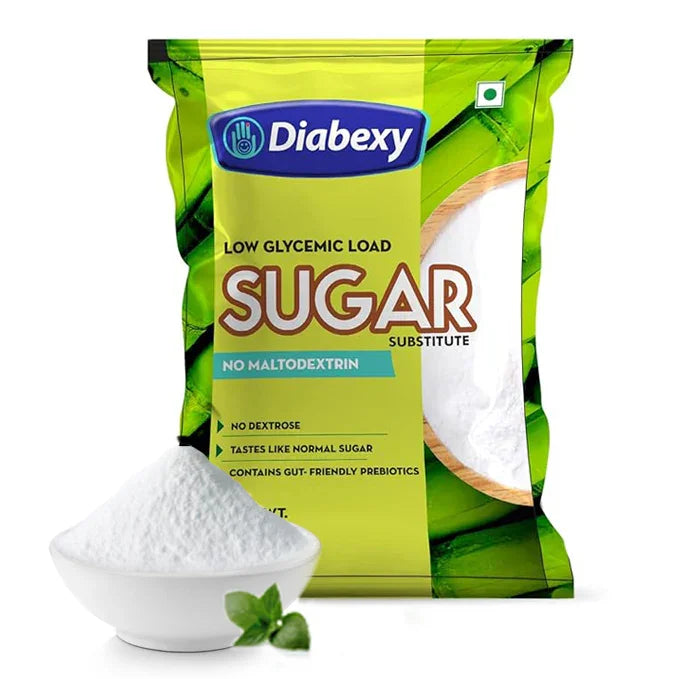
This is why Diabexy uses sucralose in its products. When the team at Diabexy was developing their cookies and other products, they tested all types of sweeteners and found that sucralose gave the best taste while being completely safe. It is also why Diabexy Sugar Substitute Drops, which are one of their most popular products after the Sugar Control Atta, use sucralose. You can add two to three drops to your chai, kheer, or even the water you use to knead your atta for a sweet roti, and it will give you consistent sweetness without any blood sugar spike, since sucralose has zero glucose load.
Diabexy is India's number one diabetes education platform trusted by over 2 million people. Our mission is to eradicate diabetes from India the way polio was eradicated, through the right knowledge and the right food. From Sugar Control Atta to Sugar Substitute Drops and the EGL Chart covering 300 Indian foods, everything we make is designed to help you manage blood sugar without giving up taste. Visit diabexy.com to explore all products.
Watch the detailed video explanation of stevia vs sucralose safety, chemistry, and usage.
5 Frequently Asked Questions
Yes, sucralose is considered very safe for diabetic patients. It has zero glucose load, does not spike blood sugar and has a safety limit of 15 mg per kg of body weight per day as recognized by both the US FDA and Indian food safety guidelines. It is the most widely researched sweetener in the world with over 100 safety studies backing it.
Not necessarily. While stevia is natural, its safety limit is actually lower than sucralose because it gets metabolized by the liver. Sucralose has a four times higher safety limit and exits the body completely without being processed. Both are safe within recommended limits but sucralose has a better taste profile with no bitter aftertaste.
Yes, sucralose is heat stable which means it does not break down when exposed to high temperatures. You can use it in cooking, baking, making kheer, or even kneading your atta with sweetened water. This makes it more versatile than many other sweeteners.
Stevia is safe within its recommended daily limit of 4 mg per kg of body weight. However, because it is metabolized in the liver similar to how paracetamol is processed, it is important not to exceed the recommended dose. It also has a bitter aftertaste that many people find unpleasant for regular daily use.
Diabexy uses sucralose in its products including cookies and Sugar Substitute Drops because of its superior safety profile, clean sweet taste with no aftertaste and heat stability. This allows their products to taste naturally sweet without any blood sugar impact.