If you have diabetes and you drink green tea, this question has definitely crossed your mind at some point. You already know that regular sugar is not good for you and you cannot add it to your tea. But then someone tells you that honey is natural and it is much better than sugar and you think, okay maybe I can add a little honey to my green tea and it will be fine. After all, honey is natural and it comes from bees and it has been used in India for hundreds of years as a healthy food.
But is honey actually safe for diabetics? And if not honey and not sugar, then what? Today we are going to answer all of this properly and by the end of this blog you will know exactly what you can and cannot add to your green tea and more importantly you will understand why, because knowing the reason is just as important as knowing the answer.
Let Us Start With One Basic Concept That Changes Everything

Before we get into honey and sugar, there is one concept you need to understand and that is EGL, which stands for Estimated Glucose Load. This is the single most important number when it comes to managing diabetes through food and once you understand this, making food decisions becomes much more straightforward.
Every food you eat has some amount of glucose in it and when that food enters your body, it releases glucose into your blood and your blood sugar goes up. The EGL value of a food tells you exactly how much glucose load that food puts on your blood. The higher the EGL, the more your blood sugar rises after eating that food. The lower the EGL, the safer that food is for a diabetic person.
At Diabexy, we have compiled the EGL values of more than 300 common Indian foods in our EGL Chart and this chart is used by lakhs of people across India every single day to make smarter food choices. But right now, let us use this concept to understand what honey and sugar actually do to your blood sugar.
What Happens When You Add Regular Sugar to Your Tea
Regular white sugar, which in chemistry is called sucrose, is made up of two components joined together and these two components are glucose and fructose. Sugar contains exactly 50% glucose and 50% fructose and this ratio is important because each of these two components behaves differently inside your body.
Glucose has a glycemic index of 100 and fructose has a glycemic index of around 30. So to calculate the glycemic index of white sugar, you take 50% of 100 which gives you 50 from the glucose part, and then you take 50% of 30 which gives you 15 from the fructose part. Add these two together and you get a glycemic index of 65 for white sugar. The EGL of white sugar is 65.

What About Honey? Is It Really Better Than Sugar?
Now this is where most people get confused because they have heard that honey is natural and healthier and better for blood sugar than regular sugar. So let us check this with actual numbers.
Honey contains about 15% water, so 100 grams of honey gives only 85 grams of sugar. The ratio of glucose and fructose in honey is roughly 60% fructose and 40% glucose. The glycemic index of honey comes out to be 58, and the EGL value is approximately 50.
| Details | White Sugar | Honey |
|---|---|---|
| Water content | 0% | Around 15% |
| Fructose percentage | 50% | Around 60% |
| Glucose percentage | 50% | Around 40% |
| Glycemic Index | 65 | 58 |
| EGL Value per 100g | 65 | 50 |
So honey has a lower EGL than white sugar and looking at just these numbers, honey seems like the better option. But this is exactly the point where most people stop their analysis and make the wrong decision, because the real problem with honey has nothing to do with its glycemic index and everything to do with what fructose does inside your body.
The Real Problem With Honey That Nobody Talks About

When you eat something sweet, whether it is sugar or honey, your body separates the glucose and the fructose from each other. The glucose goes directly into your bloodstream and raises your blood sugar level. But fructose behaves completely differently. Your body's cells cannot use fructose directly. The only organ that can handle fructose is your liver.
First, your liver converts some of that fructose into glucose and releases it into your blood slowly. Second, and this is the more dangerous part, your liver converts the remaining fructose into LDL cholesterol and triglycerides and releases these into your blood. So when you eat honey regularly thinking it is safe, your triglycerides and LDL cholesterol are rising silently.
Glucose attaches to proteins and damages them over time. But fructose attaches to proteins seven times faster than glucose does, causing faster protein damage to liver cells, blood vessels and other tissues.

So What Can a Diabetic Person Safely Add to Green Tea?
At this point you are probably thinking, so both sugar and honey are out, then what on earth do I use to sweeten my tea? The answer is that you need to look at sugar-free sweeteners but you need to choose the right ones because not all artificial sweeteners are created equal.
The sweeteners you need to avoid are the ones that contain maltodextrin or dextrose. Maltodextrin has a glycemic index of 130 (higher than pure glucose) and dextrose is just another name for glucose with GI of 100.
| Ingredient in Sweetener | Glycemic Index | Safe for Diabetics? |
|---|---|---|
| Maltodextrin | 130 | No, avoid completely |
| Dextrose | 100 | No, avoid completely |
| Sucralose | 0 | Generally safe |
| Stevia | 0 | Generally safe |
| Erythritol | 0 | Generally safe |
| Aspartame | 0 | Generally safe in small amounts |

A Simple Guide: What to Add to Your Green Tea If You Have Diabetes
| Option | EGL Value | Effect on Blood Sugar | Safe for Diabetics? |
|---|---|---|---|
| White Sugar | 65 | Raises blood sugar significantly | No |
| Honey | 50 | Raises blood sugar indirectly via liver, raises triglycerides | No |
| Sweetener with Maltodextrin | Very High | Raises blood sugar significantly | No |
| Sweetener with Dextrose | Very High | Raises blood sugar significantly | No |
| Diabexy Sugar Substitute Drops | Very Low | Minimal effect on blood sugar | Yes |
| Plain without sweetener | 0 | No effect | Best option |


What You Should Take Away From This Blog
The main lesson is that natural does not always mean safe for diabetics. Honey is natural, it comes from bees, it has been used for thousands of years. But for someone with diabetes who needs to manage blood sugar, cholesterol and triglyceride levels, honey is not a safe sweetener because of its high fructose content.
The same logic applies to jaggery, brown sugar, raw honey, coconut sugar and many other things marketed as healthy natural alternatives. When you have diabetes, the question is not whether something is natural or processed. The question is what its glucose load is and how it affects your blood sugar, your liver and your overall metabolic health.
About Diabexy
Diabexy is India's number one platform for diabetes education and over 2 million people across the country trust us for honest, science‑based information that actually helps them manage their health better. We have developed India's first low glucose load foods including Sugar Control Atta, sugar‑free sweetener drops, diabetes‑friendly cookies and our EGL Chart that covers over 300 common Indian foods.
7 Questions People Ask
Honey is not recommended for diabetic patients even though it has a slightly lower glycemic index than white sugar. The reason is that honey contains around 60% fructose and this fructose gets converted into LDL cholesterol and triglycerides in the liver. Regular honey consumption has also been shown to raise HbA1c levels over time, which means it worsens overall blood sugar management even if individual glucometer readings do not show a big spike.
When you eat honey, the glucose part raises your blood sugar and shows up on your glucometer. But the fructose part, which is the larger portion of honey, goes directly to the liver and does not immediately show up as a blood glucose spike. However, the liver converts this fructose into triglycerides and LDL cholesterol and some of it into glucose that gets released slowly. So your glucometer gives you a false sense of safety with honey.
EGL stands for Estimated Glucose Load and it tells you how much glucose load a particular food puts on your blood when you eat it. The higher the EGL value, the more your blood sugar rises. Knowing the EGL of different foods helps diabetic patients make smarter choices every day and is a far more practical tool than just looking at glycemic index alone.
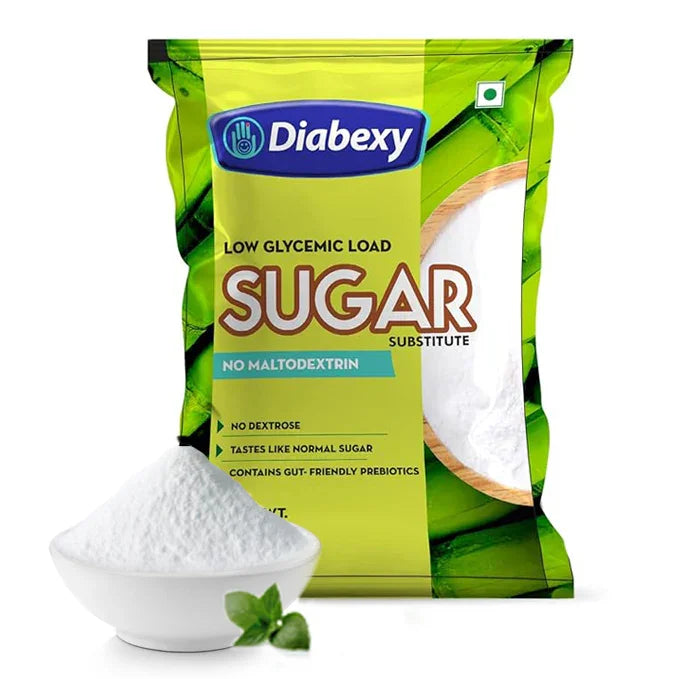
The best sweeteners for diabetics are those that contain zero glycemic ingredients like sucralose, stevia or erythritol and do not contain maltodextrin or dextrose. Always read the ingredient list on any sweetener before buying it. Diabexy Sugar Substitute Drops are specifically designed for diabetic patients with very low glycemic ingredients.
No, brown sugar and raw sugar are essentially the same as white sugar from a blood sugar perspective. The brown colour comes from a small amount of molasses but the glycemic index and glucose load are almost identical to white sugar. Neither of them is a safe alternative for diabetic patients.
Jaggery is also not recommended for diabetic patients. While it contains some minerals that refined sugar does not have, its glycemic index and glucose load are very similar to white sugar. Many people assume jaggery is a safe natural alternative to sugar for diabetes but it will raise blood sugar levels just as much as regular sugar does.
Yes, plain green tea without any sweetener is actually beneficial for diabetic patients. It contains antioxidants called catechins which have been shown in several studies to have a positive effect on insulin sensitivity. Green tea also has zero glucose load when consumed plain, which makes it one of the safest drink options for people managing diabetes. Just make sure you are not adding sugar, honey or any high glycemic sweetener to it.
Watch: Understanding Honey and Diabetes
Watch this detailed explanation on why honey may not be safe for diabetics and what you can use instead.