
Most people believe diabetes comes in only two types. Type 1 and Type 2. That was the common understanding for many years, and for most patients it was enough. But medical science has moved ahead, and doctors now recognise five distinct types of diabetes. The reason for high blood sugar is not the same in every person, so the treatment cannot be the same either.
Knowing your exact type is the first step towards the right treatment. If the type is wrong, the treatment may not work, and over time it can harm the body. This guide explains all five types in simple words: what causes each one, what the symptoms look like, whether it can be reversed, and how it is managed. It also explains the HbA1c test, the one test that tells you where your sugar stands, and the single rule that helps every type.
How Doctors Check Your Sugar: The HbA1c Test
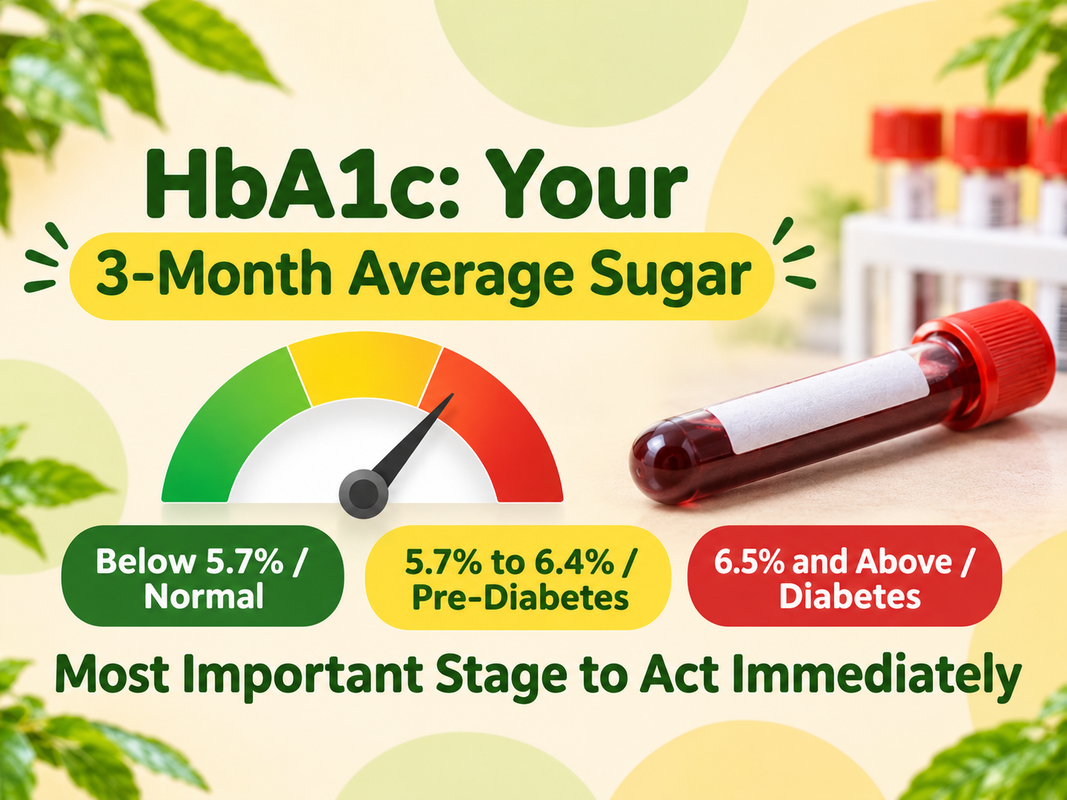
Before understanding the types, it helps to know how doctors measure diabetes. The most common test is HbA1c, which shows your average blood sugar over the past three months. A single fasting sugar reading can change from day to day, but HbA1c gives a steady picture of the last three months.
| HbA1c Level | What It Means |
|---|---|
| Below 5.7% | Normal |
| 5.7% to 6.4% | Pre-diabetes (this stage is reversible) |
| 6.5% and above | Diabetes |
Pre-diabetes is the warning stage. Sugar is higher than normal but not yet in the diabetes range. At this stage, food and lifestyle changes can still bring sugar back to normal. That is why catching it early matters so much.
The 5 Types of Diabetes at a Glance
| Type | Main Cause | Reversible? | Main Approach |
|---|---|---|---|
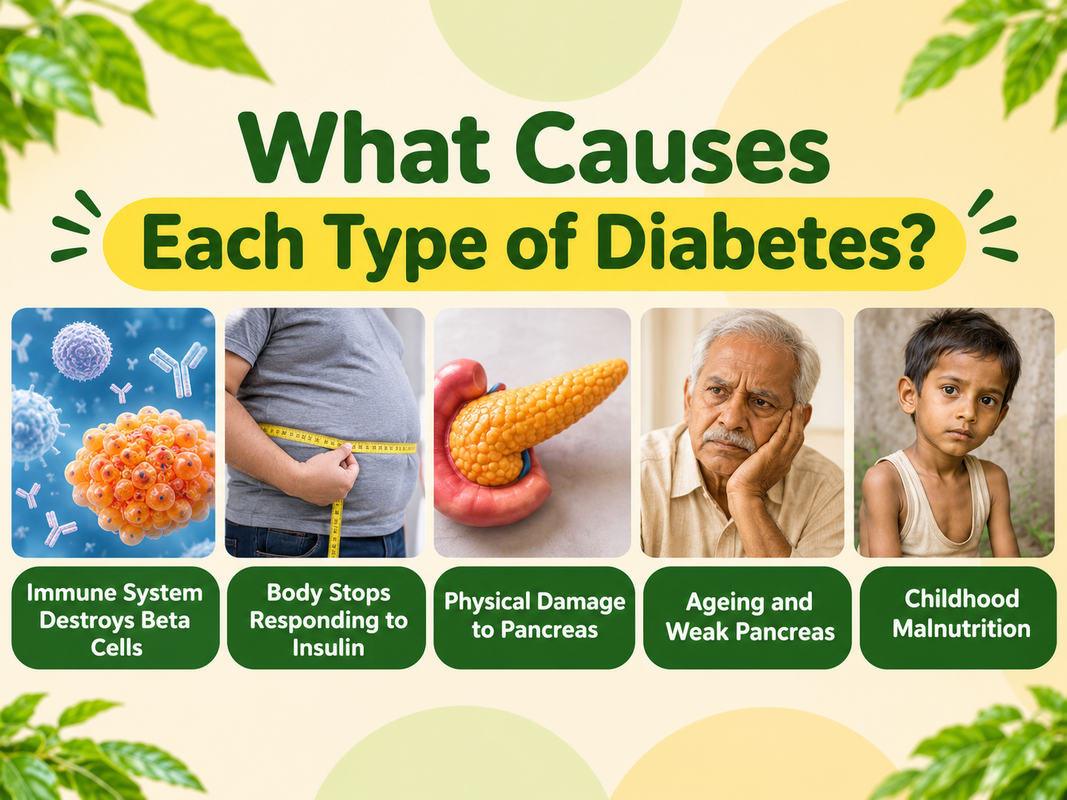
| Type 1 | Immune system destroys beta cells | No | Lifelong insulin plus low glucose load diet |
| Type 2 | Insulin resistance from lifestyle and food | Yes, in the early stages | Low glucose load diet, walking, weight control |
| Type 3 | Pancreas damaged by surgery or injury | No | Insulin plus low glucose load diet |
| Type 4 | Ageing, inflammation, weak pancreas | Not fully, but manageable | Low-dose insulin plus gentle lifestyle |
| Type 5 (MRDM) | Childhood malnutrition, weak pancreas development | Not yet | Insulin, high-protein diet, weight gain |
Type 1 Diabetes: When the Immune System Attacks the Pancreas
Type 1 diabetes usually appears in children or young adults. It happens when the body's own defence system attacks the beta cells of the pancreas. These are the cells that make insulin. Once they are destroyed, the body makes very little insulin or none at all, and sugar stays high in the blood.
Type 1 accounts for about 5 percent of all diabetes cases. It cannot be reversed, and the person needs insulin for life. The daily routine is strict: insulin injections, careful sugar monitoring, and a low glucose load diet that avoids sudden spikes. With the right routine, people with Type 1 live full and normal lives, and careful food control protects the kidneys and other organs from damage.
The usual signs are frequent urination, constant thirst, sudden weight loss, and tiredness. These signs often appear quickly in Type 1, over weeks rather than months.
Type 2 Diabetes: The Most Common and the Most Reversible
Type 2 is the diabetes most adults get. It makes up about 90 percent of all diabetes cases. It develops when the body stops responding properly to insulin. Think of your cells as small rooms and insulin as the key that opens the door. When you eat heavy, high-glucose food every day, sugar floods the blood, the cells fill up, and after a while they stop answering the key. This is called insulin resistance, and sugar stays in the blood.
The good news is that Type 2 can be reversed in its early stages. When sugar is caught early, a low glucose load diet, regular walking, and weight control can bring sugar back to normal completely. The key word is early. The longer high sugar continues, the harder it becomes to reverse, because the pancreas gets tired and the resistance grows deeper.
The usual causes are a high-carb diet, very little physical activity, weight gain, stress, and late sleeping habits. That is why the treatment is not only medicine. Food, movement, sleep, and weight all play a part in bringing sugar down.
Type 1 vs Type 2 Diabetes: The Key Differences
| Type 1 | Type 2 | |
|---|---|---|
| Cause | Immune attack on beta cells | Insulin resistance |
| Usual age | Children and young adults | Usually adults |
| Share of cases | About 5% | About 90% |
| Insulin | Body makes almost none | Body makes insulin but cells ignore it |
| Reversible | No | Yes, in the early stages |
| Treatment | Lifelong insulin | Diet, walking, weight control, medicine if needed |
Type 3 Diabetes: When the Pancreas Gets Damaged
Type 3 diabetes is also called secondary diabetes, because it follows damage to the pancreas. It can happen after an accident, surgery near the pancreas, or treatment for pancreatic cancer. In these cases the beta cells are reduced or damaged, so the pancreas cannot make enough insulin.
Type 3 cannot be reversed. The treatment is low-dose insulin, a low glucose load diet, and some tablets if the doctor decides they will help. Food matters a lot here, because a low glucose load diet reduces the need for insulin and keeps sugar steady through the day.
Type 4 Diabetes: Diabetes of Old Age
Type 4 diabetes appears with age, usually in people above 60 to 70 years. Even thin elderly people can get it. With age, low-grade inflammation in the body increases, muscles reduce, insulin becomes less effective, and the pancreas grows weaker. Sugar rises slowly, often without clear warning signs.
Type 4 cannot be fully reversed, but it can be managed well. Low-dose insulin often works better than tablets in older people, along with low glucose load food, gentle exercise, proper sleep, and stress control. A calm and regular lifestyle helps a lot in Type 4 diabetes.
Type 5 Diabetes (MRDM): When Childhood Nutrition Shapes the Pancreas
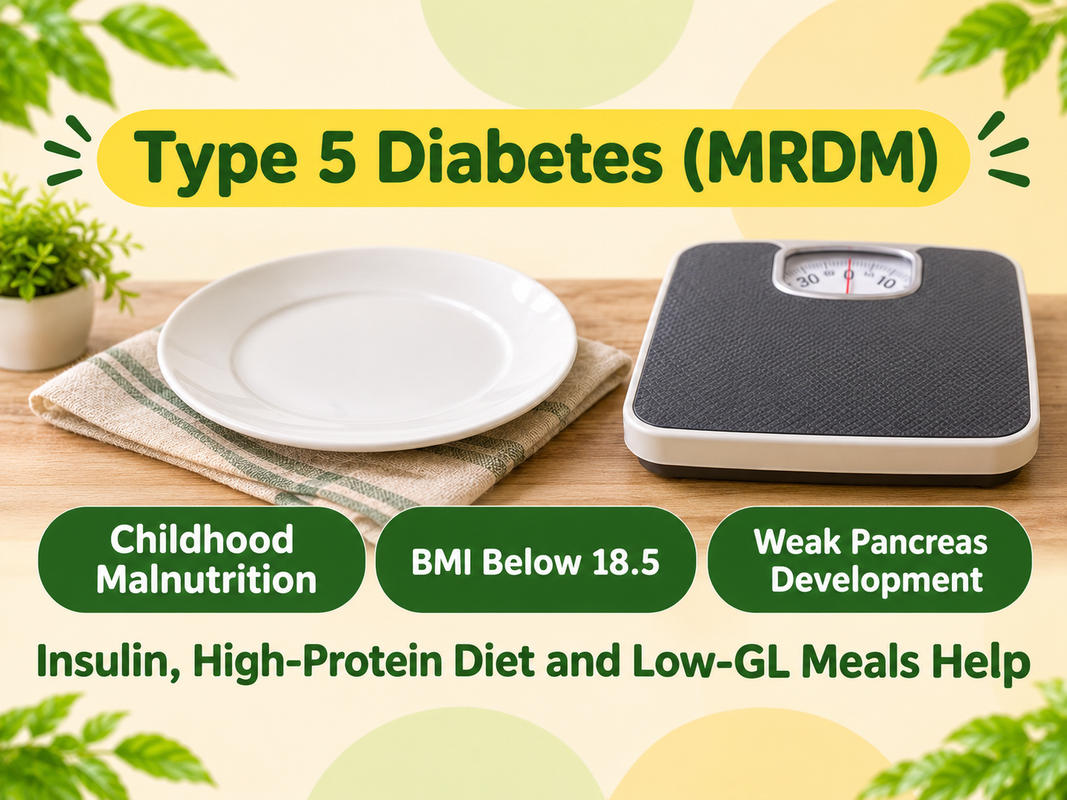
Type 5 is the newest recognised type, and it matters a lot in India. Its full name is Malnutrition-Related Diabetes Mellitus, or MRDM. It happens in people who had poor nutrition in childhood, very low body weight with a BMI below 18.5, and weak pancreas development because of early-life undernutrition. The pancreas never fully develops, so it cannot make enough insulin in adult life.
The International Diabetes Federation formally acknowledged Type 5, and Indian medical researchers played a significant part in that recognition. This is important because Type 5 is more common in countries like India, where childhood undernutrition has affected many people.
Type 5 cannot be reversed yet, but it can be managed well. The treatment is insulin, a high-protein diet, weight gain, and low glucose load meals. The aim is to support the weak pancreas and keep sugar steady.
What About Gestational Diabetes?
Gestational diabetes happens during pregnancy. Sugar rises because pregnancy hormones make the body less sensitive to insulin. It usually goes away after delivery, but the mother has a higher chance of developing Type 2 diabetes later in life. Careful low glucose load food during pregnancy helps keep sugar normal and protects both the mother and the child.
One Rule That Helps All 5 Types: Keep Your EGL Low
No matter which type you have, one rule helps every type: keep your blood sugar steady. No big spikes after meals, and no sudden drops. Stable sugar protects your kidneys, eyes, heart, and nerves from long-term damage.
The simplest way to keep sugar steady is to reduce the Estimated Glucose Load (EGL) of your daily food. EGL measures how much glucose a food actually adds to your blood. Low-EGL foods raise sugar slowly and gently. High-EGL foods spike it fast. When you choose low-EGL foods, add protein to each meal, and walk after eating, your sugar stays in a safe range for longer.

Diabexy EGL Chart
Check the EGL of more than 300 Indian foods before you eat them, and plan your meals with confidence. The chart shows every food in green, yellow, or red, so you always know what is safe for your sugar.
Diabexy Sugar Control Atta
Rotis made with low glucose load atta keep your sugar steadier than rotis made with regular wheat atta. It is India's first atta backed by published clinical evidence, and it fits easily into your daily meals.
Small habits make a big difference: avoid high-EGL foods, choose low-EGL foods, use low glucose load atta, add protein to each meal, walk after eating, and sleep on time.
Common Symptoms of Diabetes
The symptoms are not the same for every type, and some people have no clear symptoms at all. Type 1 often appears suddenly over a few weeks, while Type 2 develops slowly over months or years. The common signs to watch for are frequent urination, constant thirst, unexplained weight loss, tiredness, slow healing of wounds, and blurred vision. If you notice these signs, get your HbA1c tested and speak to your doctor. Only a doctor can confirm the diagnosis and identify your exact type.
Find out your exact diabetes type: WhatsApp "Diabetes Types" to +91 84489 52009, or visit link.diabexy.com/dbttype to know your exact diabetes classification and manage your daily dietary Glucose Load with certified health coaches.
Frequently Asked Questions
How many types of diabetes are there?
There are five types: Type 1, Type 2, Type 3, Type 4, and Type 5 (MRDM). Gestational diabetes is a separate temporary type that happens during pregnancy.
Which type of diabetes is the most common?
Type 2 diabetes, which makes up about 90 percent of all diabetes cases. It is linked to insulin resistance, and it can be reversed in its early stages with a low glucose load diet and lifestyle changes.
Which type of diabetes can be reversed?
Type 2 diabetes can be reversed in its early stages. Pre-diabetes can also be reversed. Type 1 and Type 3 cannot be reversed. Type 4 cannot be fully reversed but can be managed well, and Type 5 cannot be reversed yet but can be managed with insulin, a high-protein diet, and low glucose load meals.
What is Type 5 diabetes (MRDM)?
Type 5 diabetes is Malnutrition-Related Diabetes Mellitus. It happens when childhood undernutrition leaves the pancreas underdeveloped, usually in people with a BMI below 18.5. The International Diabetes Federation formally recognised it, with a significant contribution from Indian medical researchers.
What is a normal HbA1c level?
Below 5.7% is normal, 5.7% to 6.4% is pre-diabetes, and 6.5% and above is diabetes. HbA1c shows your average blood sugar over the past three months.
Is there an older guide to the 5 types of diabetes?
Yes. Diabexy published an earlier guide to the 5 types here: 5 Types of Diabetes Explained: Causes, Symptoms, Reversal Possibility, Treatment Options. This new guide is built around the latest video, with the IDF recognition of Type 5 and the newest guidance on each type.
How can I find out my exact diabetes type?
WhatsApp "Diabetes Types" to +91 84489 52009, or visit link.diabexy.com/dbttype. A doctor, along with lab tests like HbA1c, can confirm the diagnosis and identify your exact type.
Watch the Full Video
Watch the detailed video explanation of all 5 types of diabetes: https://youtu.be/dsS3_oO50fY
About Diabexy
Diabexy is India's number one diabetes education platform, trusted by more than 2 million people. Diabexy makes India's first low glycemic load foods, including Sugar Control Atta, India's first atta backed by published clinical evidence. Our mission is to eradicate diabetes from India the way polio was eradicated, through the right knowledge and the right food. Visit diabexy.com.
Disclaimer: This blog is for education only. It does not replace medical advice. Always consult your physician for formal diagnosis, laboratory testing, and personal treatment plans.


